Codernex V1: Engineering a High-Performance Portfolio Ecosystem
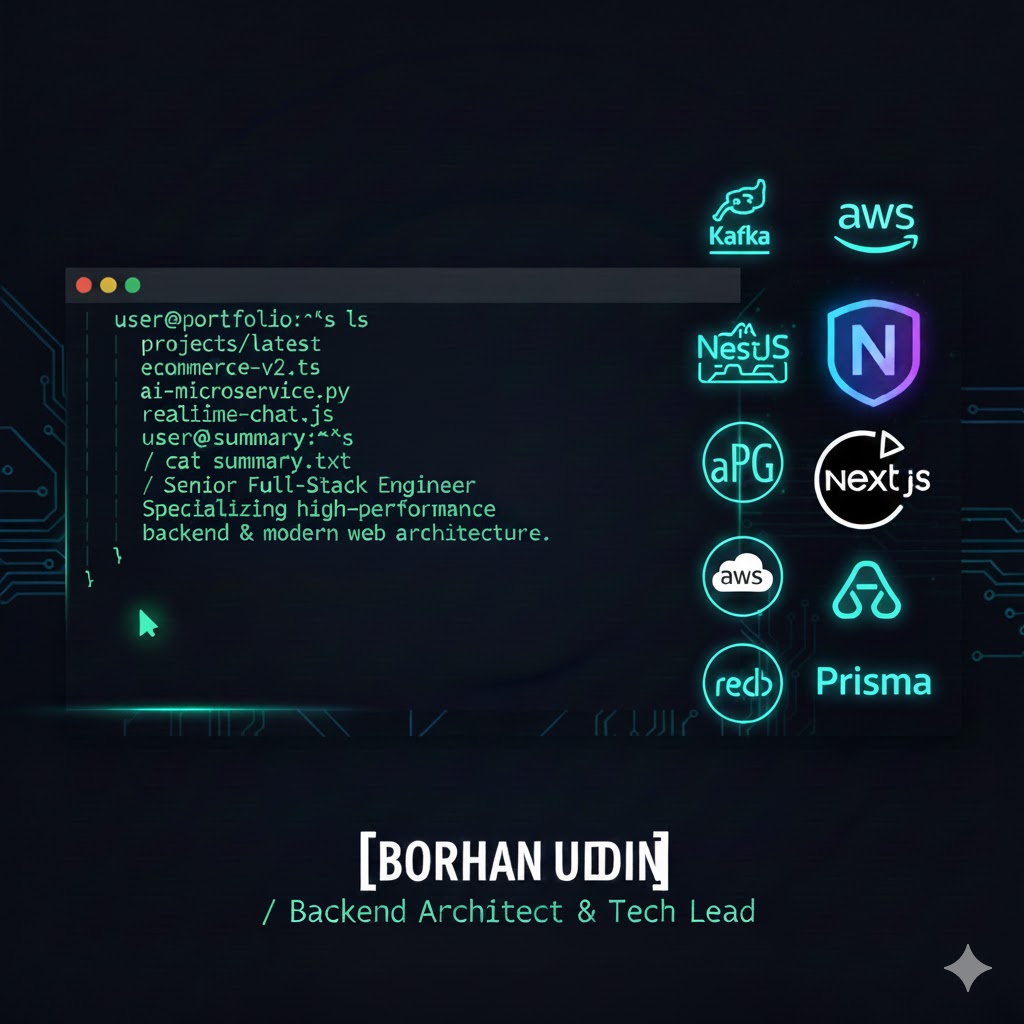
Deploying Codernex: A Software Engineering Retrospective
The launch of Codernex V1 marks the completion of a high-performance ecosystem designed to showcase modern full-stack capabilities. This platform isn't just a static site; it’s a demonstration of scalable architecture, clean code principles, and a custom-built Content Management System (CMS).
The Core Innovation: Custom Block Editor
The standout feature of this platform is the Block-based Editor. Unlike standard text areas, this editor allows for modular content creation, enabling rich layouts that are perfectly responsive.
Technical Implementation
JSONB Data Structure: Content is not stored as raw HTML, but as a structured JSONB array in PostgreSQL. This allows for extreme flexibility—I can add new block types without changing the database schema.
Component Mapping: On the frontend, Next.js maps each JSON block type to a specific React Server Component, ensuring only necessary code is sent to the client.
Seamless Integration: The editor is directly connected to the backend API, allowing for instant "autosave" functionality and real-time validation of technical content.
Backend Architecture: The NestJS Core
The backend is built as a modular API using NestJS. By leveraging Dependency Injection and a clear service-repository pattern, the system remains decoupled and maintainable.
Dynamic Media Routing
The platform features an intelligent S3 Media Service. When a file is uploaded via the Block Editor, the backend intercepts it and performs MIME-type analysis:
Images: Routed to the images/ folder (JPEG, PNG, WebP).
Videos: Routed to videos/ for bandwidth optimization (MP4, WebM).
Documents: Organized under docs/ for easy download management (PDF).
Frontend Excellence: Next.js 15 & Performance
The frontend experience is driven by Next.js 15, utilizing the latest App Router features to achieve optimal Core Web Vitals and SEO performance.
Asset Management UX
I developed a custom MediaUpload component to bridge the gap between the browser and the cloud:
Drag-and-Drop: Built with a terminal-inspired aesthetic and real-time upload progress.
Parallel Processing: Uses concurrent streams to handle multiple asset uploads simultaneously.
SEO Engine: Automated generation of sitemap.xml and robots.txt ensures that every project and blog post is indexed instantly.
Technical Stack Summary
Core Frameworks
Frontend: Next.js 15 (React 19)
Backend: NestJS (Node.js)
Editor: Custom Block-Based CMS
Language: TypeScript (Strict Mode)
Cloud & Data
Storage: AWS S3 (MIME-based dynamic folders)
Database: PostgreSQL (JSONB for Content Blocks)
ORM: TypeORM
Future Roadmap: Codernex Evolution
The V1 deployment is just the foundation. My technical roadmap for future iterations includes:
Interactive Blocks: Pre-configured block layouts for faster technical logging.
Improve Block Editor: Currently i'm facing some minor issues which i want to fix.
Redis Caching: Integrating a caching layer for high-traffic technical logs to reduce database latency.
AI-Assisted Writing: A dedicated block that helps draft technical summaries using LLM integrations.
Global CDN: Implementing AWS CloudFront for edge-caching assets globally.
Status: DEPLOYED // System: CODERNEX-V1 // Lead: BORHAN UDDIN (@codernex)